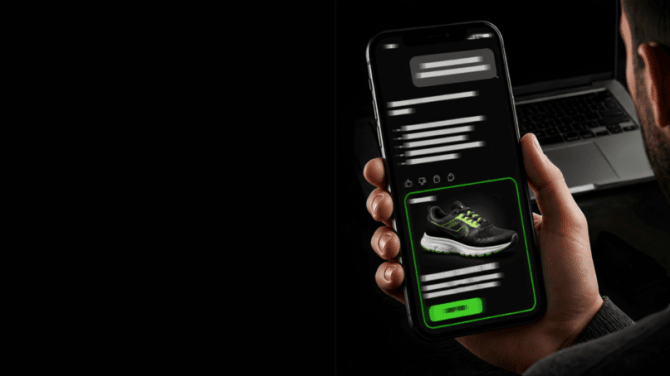
An agency partner supporting advertising in ChatGPT

M+C Saatchi Performance is an agency partner supporting brands seeking support to advertise in ChatGPT. Through M+C Saatchi Performance, advertisers can plan, activate, and optimize campaigns in ChatGPT with strategic guidance, campaign management, and measurement support.
Advertising in ChatGPT is currently in a pilot phase. That makes structured testing essential: clear goals, the right measurement from day one, and scaling decisions based on evidence. That’s the discipline we bring. We help brands test it with clear goals.

Why advertise in ChatGPT?

ChatGPT has more than 1 billion weekly active users (Aug 26). People use it at every stage of a purchase decision, from first questions to final comparisons. Ads in ChatGPT reach them while their intent is still forming.

  • Intent in context: Relevance comes from the conversation, not from keywords alone; and it reaches people in the moment, whether they’re new to your brand or already customers.
  • Clear separation: Ads appear below responses, are labeled as sponsored, and don’t influence ChatGPT’s answers.
  • A new channel to own: Brands that build learnings now will understand how conversational intent fits their funnel.

Is ChatGPT advertising like Google Ads?

The auction works in a similar way to search, but relevance is driven by conversational context rather than keywords alone. Ads can be matched to a user’s latest question and, where personalization is enabled, to broader interests from their ChatGPT conversations. Advertisers never see those conversations. That’s why we start by mapping your keyword themes to the real questions your customers ask, then use context hints to guide matching.

Our ChatGPT Ads services

Service What we do
Eligibility and readiness check Confirm category and market eligibility against OpenAI’s Ads Policies
Conversation and intent mapping Turn your top keyword themes into real customer questions and group ads by need
Creative and formats Adapt existing creative to Standard Ads and Product Feed Ads
Landing page audit Keep the message consistent from ad to page
Activation and optimization Set up campaigns, bidding (CPM, CPC, OCPC, OCPM) and budget controls
Measurement Set up the Measurement Pixel, Conversions API and UTMs, and integrate with your attribution partner (AppsFlyer, Adjust and others)
Test-and-scale framework Define success metrics and scaling criteria before any spend goes live

How we run a ChatGPT Ads pilot

  1. Readiness: Objectives, metrics, tracking and budget agreed.
  2. Mapping: Customer questions, ad groups and existing creative selected.
  3. Activation: A simple structure that avoids splitting budget across too many ad groups too early.
  4. Learn and optimize: Judge success on the quality of what you learn as well as on performance.
  5. Scale: Grow budget against the criteria agreed upfront.

Where ChatGPT Ads fit in your media mix

ChatGPT Ads add to your media mix. They don’t replace search, social or programmatic. The value comes from understanding where conversational intent sits in your customer journey, and that’s different for every brand.

ChatGPT Ads across the decision-making journey

People use ChatGPT throughout the decision-making journey, from early research to choosing what to buy. A search usually starts with a few keywords. A ChatGPT conversation starts with a full question that includes the person’s needs, constraints, and context. That gives you a different kind of intent signal to reach, and one your other channels can’t see.

How ChatGPT Ads work with your other channels

Search

Your keyword strategy is the starting point. We turn your top keyword themes into the questions your customers actually ask in ChatGPT. Search keeps doing its job, and ChatGPT adds reach in conversations.

Social and creative

You don’t need to start from scratch. Your existing creative library can be adapted to ChatGPT Ads.

Retail and catalog

If you sell a range of products, Product Feed Ads use the product images, titles and prices you already manage.

App

Run separate iOS and Android campaigns, and connect them to the attribution partner you already use, such as AppsFlyer, Adjust, Singular, Kochava or Branch. Send people who don’t have your app to the install page and existing users to the relevant in-app page.

What ChatGPT Ads don't do yet

ChatGPT Ads are conversation-led, not audience-led. Display campaigns start by defining who to target, such as lapsed users or people who haven’t opened your app. ChatGPT Ads start with what people are asking. Your ad can reach anyone in a relevant conversation, whether they’re a new prospect or an existing customer.

That changes how remarketing works. Instead of targeting a list, you route each click to the right place. People who don’t have your app go to the install page. People who do go straight to the relevant in-app page, where you can re-engage them or cross-sell. The same applies on the web: a personal care brand can reach existing customers searching for hair oil and send them to that product.

SKAN reporting isn’t currently available, so keep iOS app attribution in your existing measurement set-up.

How to measure their contribution

Set up tracking before any media goes live. That means the ChatGPT Ads Measurement Pixel or Conversions API, UTM parameters, and click-through and view-through attribution. Agree your success metrics and scaling criteria upfront, so ChatGPT Ads are judged on the same terms as the rest of your mix.

How to get started

Run ChatGPT Ads as a pilot with its own test budget. Our guidance is around $20K over one month. That’s a recommendation, not a platform minimum. Keep the set-up simple at the start, because splitting budget across too many ad groups can lead to underdelivery.

“Brands that test ChatGPT Ads now will learn while it’s still affordable to experiment, and build their funnels in the ecosystem ahead of competitors. For an ad platform that didn’t exist at the start of 2026, ChatGPT Ads are already having a real impact.”

Emil Dewy | Senior Programmatic Manager, M+C Saatchi Performance

FAQ

Yes. M+C Saatchi Performance is an agency partner supporting advertising in ChatGPT. We help advertisers plan, activate and optimize campaigns, with strategic guidance and ChatGPT Ads management, measurement support, and integration with the rest of their media plan.

Ads in ChatGPT are shown only to users on the Free and Go plans. They aren’t shown to users on Plus, Pro, or any Business plan, or to users who say, or are predicted to be, under 18.

Ads in ChatGPT appear below ChatGPT’s response, not inside the conversation itself. They’re labeled as sponsored and look visually different from the answer.

No. Ads don’t change the answers ChatGPT gives. Responses are based on what’s most helpful to the user, and ads are always kept separate and clearly labeled. OpenAI also keeps conversations private from advertisers and doesn’t sell user data to them.

ChatGPT Ads currently have two formats. Standard Ads include an image, headline, and description. Product Feed Ads show product images, titles and prices, which suits retailers promoting a range of products.

No. We recommend starting with creative you already have, especially assets that answer your customers’ most valuable questions. Each ad needs an advertiser name, a logo, a headline, a description, an image, and a landing page.

The auction works in a similar way to search, but conversational ads in ChatGPT are matched based on conversational context rather than keywords alone. Ads can be matched to a user’s latest question and, where personalization is enabled, to their broader interests. Advertisers never see users’ conversations.

It depends on the market. Some categories are restricted, including alcohol, tobacco, gambling and financial services. Check OpenAI’s Ads Policies for your category and country before planning a campaign.

As of October 2026, advertising in ChatGPT is available in 89 countries worldwide, following OpenAI’s latest expansion into 26 additional markets.

ChatGPT Ads can be bought on four models. CPM charges per impression, CPC charges per click, OCPC optimizes towards conversions while charging per click, and OCPM optimizes towards conversions from both clicks and views.

Use the ChatGPT Ads Measurement Pixel or Conversions API, together with UTM parameters on your landing pages. Both click-through and view-through attribution are supported. ChatGPT Ads also work with attribution partners including AppsFlyer, Adjust, Singular, Kochava, and Branch.

Yes, but not the way display retargeting works. ChatGPT Ads reach people based on relevant conversations, not audience lists, so existing customers see your ads when they ask about something related. You remarket by sending them to the right destination: your install page if they don’t have your app, or the relevant app or product page if they do. Uploading customer lists is technically possible, but we don’t recommend it. Ads only show when those users are researching something relevant, so reach stays limited and costs are hard to justify on performance.

There’s no algorithmic advantage either way. Working with an agency partner like M+C Saatchi Performance gets you strategy, intent mapping, tracking set-up, and a structured test-and-scale framework around the media.

We recommend most brands start with a test budget of around $20K over one month. This is our guidance, not a platform minimum. Advertising in ChatGPT is currently in a pilot phase, so define success metrics and scaling criteria before you spend.

Ready to test advertising in ChatGPT?

contact

Talk to our team about building a ChatGPT Ads pilot that fits your wider media plan.