Testing ChatGPT Ads: What We’ve Learned
Now that ChatGPT ads are rolling out to more markets, it's time for advertisers to start testing them. ChatGPT launched advertising offerings in February 2026. ChatGPT ads are now available to target users of both ‘Free’ and ‘Go’ subscriptions on both app and web.
We tested and tried it so you can have all the info at the your fingertips:
- ChatGPT ads, placements, and formats
- How ChatGPT differs from search
- Self-serve vs DSP buying models
- Considerations
- Pricing
- Why test now
AI Advertising: It’s Time to Test
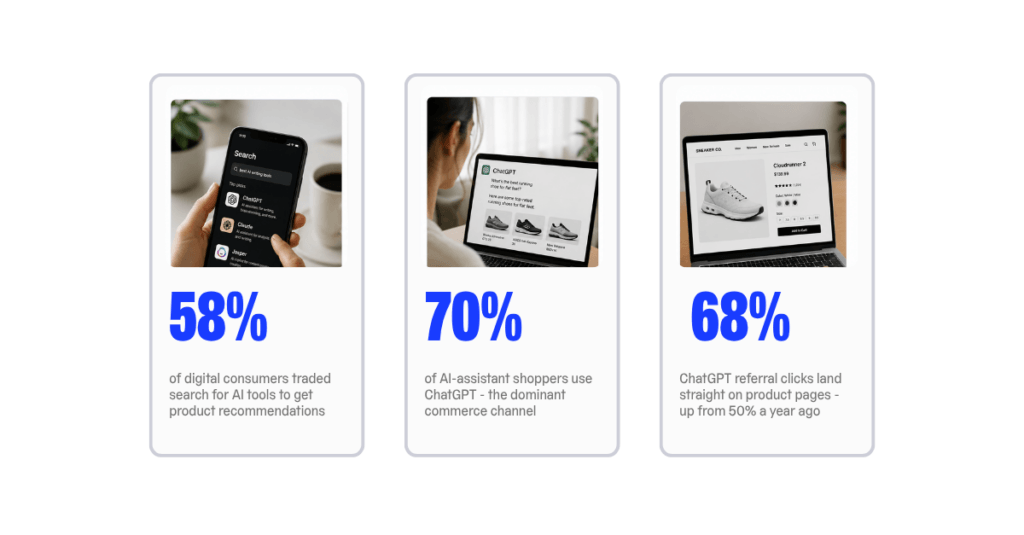
The way we research and shop has changed irreversibly. Thanks to the various LLMs now available to the masses, customer behavior has changed. With 58% of digital customers trading Search for AI tools to research product recommendations, retail is seeing huge change due to AI.
ChatGPT is at the forefront of this change and, in a bid to drive revenue, launched advertising offerings in February 2026. ChatGPT ads are now available to target users of both ‘Free’ and ‘Go’ subscriptions on both app and web.
For advertisers interested in testing these placements, ChatGPT ads can be accessed using either the self-serve platform, ChatGPT Ad Manager, which became available in May 2026, or via DSPs such as Criteo, Stackadapt, Thrad, etc.
Ad Placements and Formats
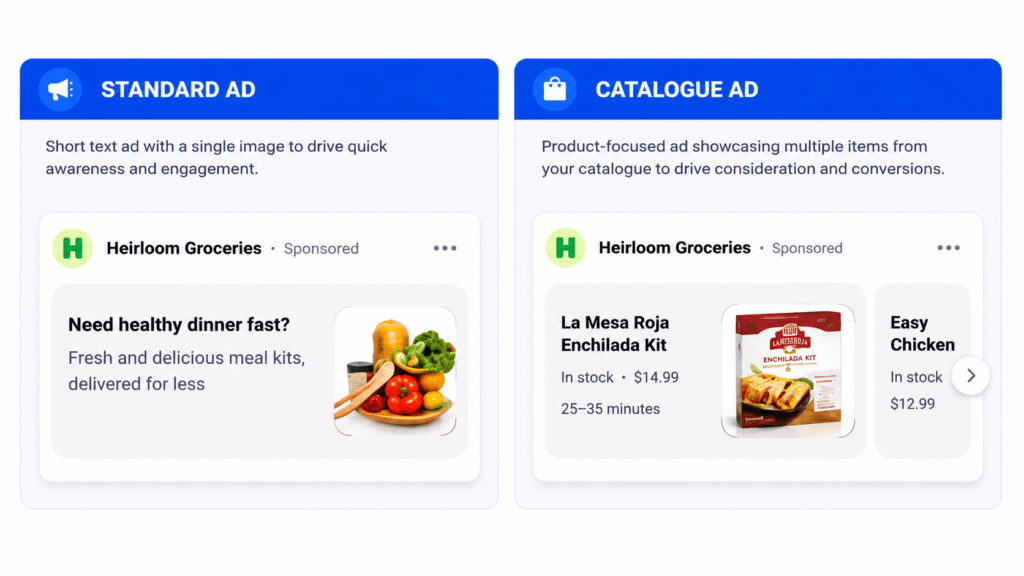
Ad placements are at the end of an AI answer, and there are two types available:
- Standard ads are built manually inside AdsManager and appear to users as a single, static sponsored card beneath an AI response. They contain the advertiser’s logo, title, and description.
- Catalog ads are generated automatically through a product feed. They look like scrollable, shoppable carousels displayed at the bottom of a conversation when someone is researching or comparing products.
How ChatGPT Ads Are Different
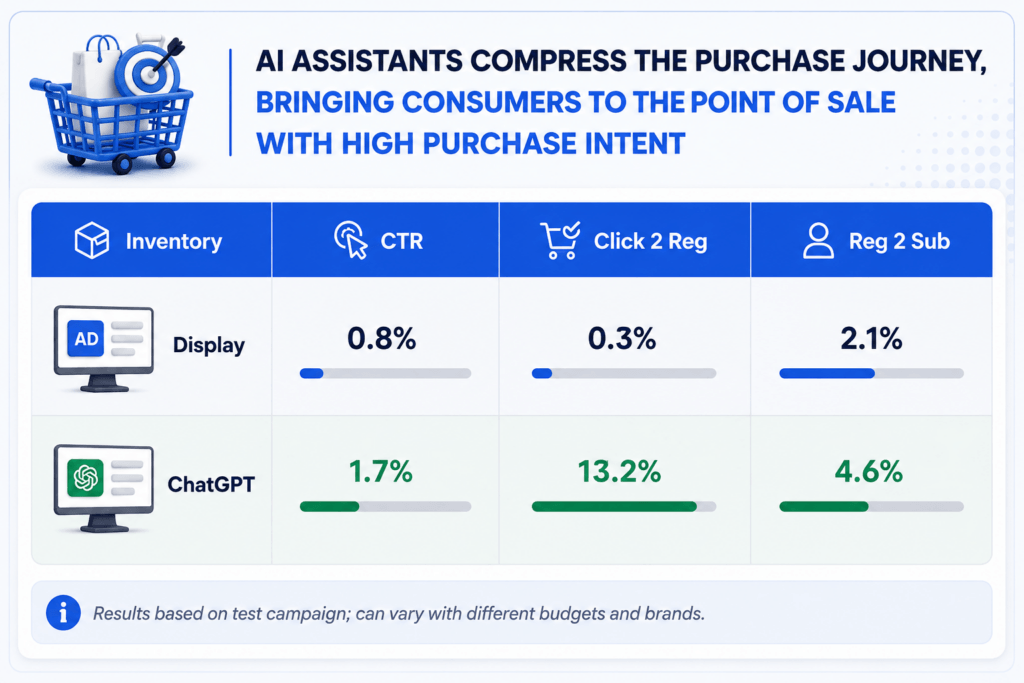
“AI is changing the way people research and shop; as a consequence, AI has compressed the shopping funnel. Previously, customers would research and be served multiple ads; they would visit multiple sites and then make a purchase. ChatGPT is compressing this funnel, with research now being done in the LLM interface. This means that when users arrive at the point of sale, they tend to have a high purchase intent.” Emil Dewy
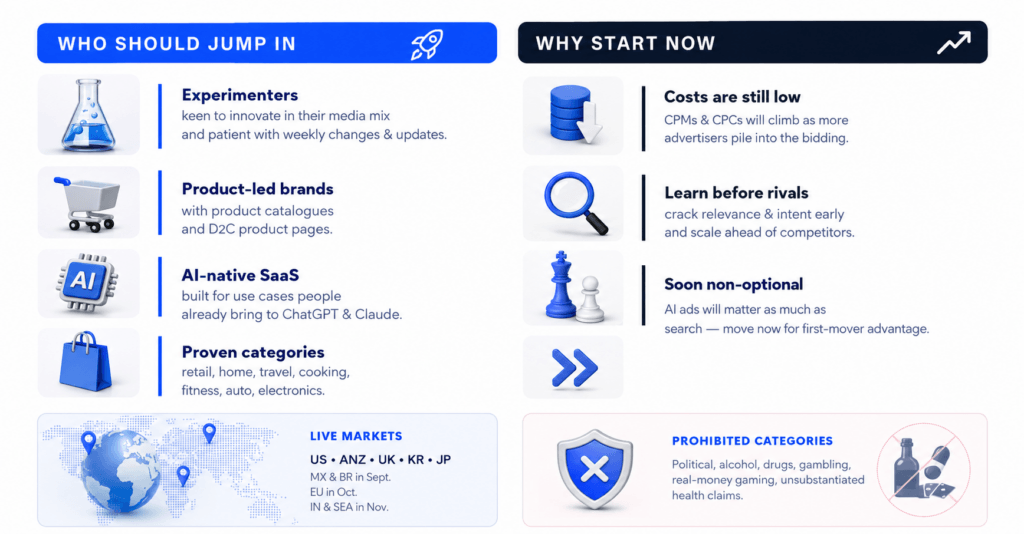
Markets currently live with ChatGPT ads are the US, Australia, New Zealand, the UK, Korea, and Japan. According to ChatGPT, Mexico and Brazil are due to go live in September, followed by Europe in October, and India and SEA markets in November.
In a ChatGPT ad pilot with a xxx client in the US market, testing has shown that consumers reach the point of sale with higher purchase intent than with ‘traditional’ display.
ChatGPT vs. Search
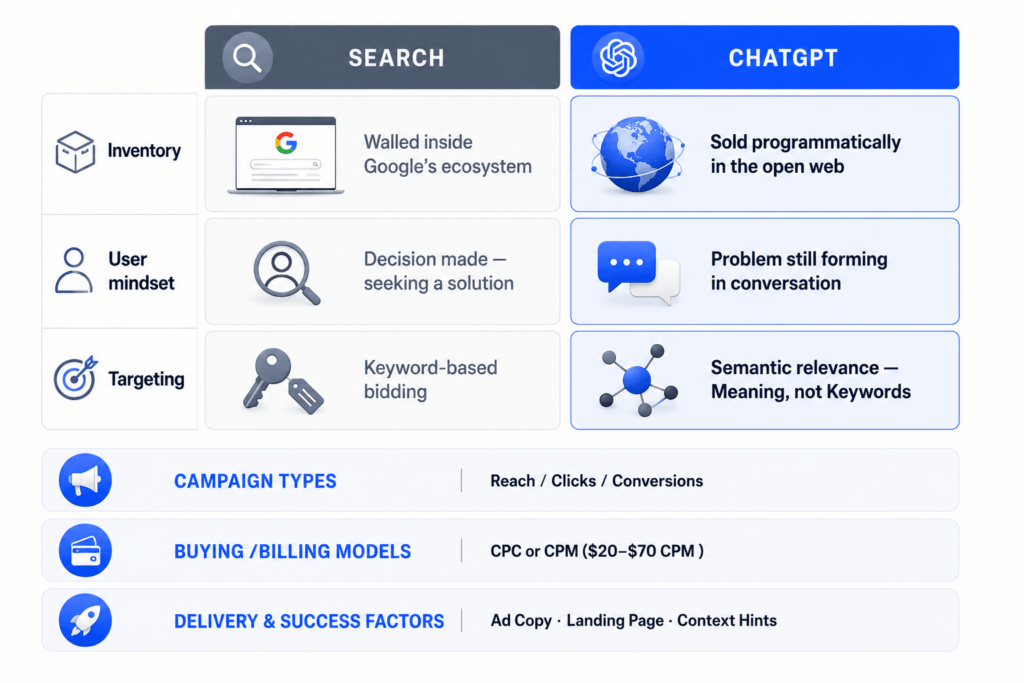
There is a temptation to draw parallels between ChatGPT and paid search, but there are significant differences too, for example:
- Inventory availability. Paid search remains within a walled ecosystem like Google. ChatGPT inventory is available through its self-serve platform or through DSPs.
- User behavior: Paid search involves customers comparing product information across sources to reach a decision. With AI, they are finding an answer in one interface, which shows multiple results in one place.
- How the relevance is determined: Search is keyword-based, whereas ChatGPT relies on semantic meaning rather than keywords.
- Campaign objectives: unlike traditional paid search, ChatGPT Ads currently support campaigns optimised for Reach, Clicks or Conversions, giving advertisers flexibility depending on whether the goal is awareness, traffic or performance outcomes
The semantic nature of AI means that ads are based on relevance: a user has a specific problem framed as a question, and the algorithm evaluates and delivers on the meaning behind the prompt. Then the model decides which ad to show.
Self-serve vs. DSP
ChatGPT has its own self-serve ad manager, or inventory can be purchased via a DSP. The benefits of buying via a DSP are
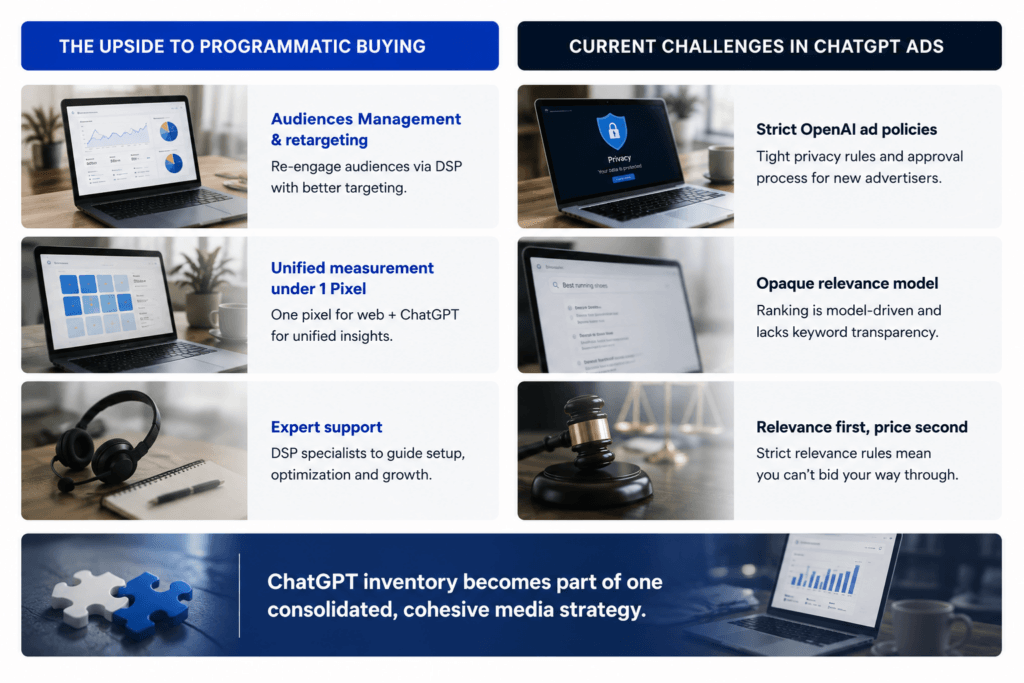
- ChatGPT, as a channel, will be part of a comprehensive media strategy rather than running in isolation.
- Self-serve ChatGPT Ad Manager offers limited functionality, e.g., no first-party data, meaning no retargeting capability, whereas a DSP offers access to users within the wider programmatic environment
- Expert support and planning. DSP specialists advise on setup, optimisation and troubleshooting, instead of going fully self-serve on the direct OpenAI Ads platform. Many DSP partners also offer add-on tools that help identify intent clusters and map context hints to ad relevancy, making it easier to build effective campaigns.
Considerations
“There are a lot of challenges; for example, you cannot force spending. If an ad is not deemed relevant, the advertiser will not be able to spend the budget to drive awareness no matter the CPC/CPM bids. Therefore, it’s essential that a well-thought-out strategy be employed to ensure advertising is successful. For example, without a prompt targeting strategy, semantics will not be taken into consideration, and placements will not be delivered.” Emil Dewy
Pricing
CPM and CPC buying options are available. Advertisers can currently optimise campaigns for Reach, Clicks or Conversions and set a maximum bid at the ad-group level. ChatGPT recommends a maximum bid of $3-$5 per click to begin testing..
Why Test Now
Currently, the channel is still in a very much test phase, which means that it is relatively unsaturated, with 2k advertisers enrolled in a Criteo pilot program. CPM and CPC costs are low, enabling advertisers to test & learn. As demand rises, the CPM and CPC costs will increase, so the earlier you test, the easier it will be to scale, as a fully fledged strategy will already be in place.
Advertisers most suited to ChatGPT ads:
Clients seeking to innovate and experiment, with a flexible approach to testing and an understanding that the channel is innovating rapidly. The model and systems change rapidly with regular updates, and advertisers must be flexible. The system is suitable for product-led brands with a product catalog and D2C products such as retail, home, travel, cookery, etc.
- Direct-to-consumer retail brands with product catalogs. ChatGPT offers a catalog ad format that’s well suited for these advertisers.
- SaaS and app businesses with products that use cases people already come to ChatGPT or Claude, for example, a no-code AI app builder.
- Subscription & Knowledge Business: Education tech, news, businesses where their customers are actively seeking trusted information sources and premium content.
- B2B & Service Providers: Decision-makers are increasingly using ChatGPT to research and compare vendors.
In Summary
“For brands seeking innovation and with an appetite for a little risk, testing ChatGPT ads is something to be considered. Costs are likely to increase over the next few months as more advertisers jump in and elements such as targeting continue to improve.” Emil Dewy
Contact us to learn how we are helping clients test ChatGPT and strategically show up in GEO search.
Talk to UsFAQs
Currently, at the time of the writing of this article, ChatGPT ads are available:
- Now: US, UK, ANZ, KR, JP
- Sept: MX, BR
- Oct: EU
- Nov: IN, SEA
D2C brands with product feeds such as retail, travel, fashion, beauty, home improvements, auto, etc, are best suited to start testing ChatGPT ads.
Yes, MMPs are now enabling measurement of ChatGPT ads. Contact us for more details.