
Key Performance Marketing Trends for 2026 Shaped by The Biggest Shifts of 2025
A detailed analysis of trends and forecasts, making way for the convergence era of performance marketing.
For so many reasons, 2025 has been a remarkable year for the industry. The rate of change has been relentless and inspiring, from the pervasive integration of Artificial Intelligence and the rising consumer demand for authenticity and purpose-driven initiatives, to the continued dominance of immersive digital experiences like shoppable video and augmented reality.
At the start of the year, we worked with our teams and experts to publish “15 Performance Marketing Trends to be aware of in 2025.” It was our way of setting the lens for the year ahead, placing bets on where growth, innovation, and disruption would most likely take shape, from AI-assisted creativity and privacy-first strategies to social commerce, Retail Media Networks (RMNs), and predictive analytics.
Now that we’ve lived through 2025, it’s time to look back to see which trends took flight, which are still maturing, and how the year’s biggest shifts came to life.
This report provides a solid understanding of what changed in performance marketing in 2025 and what will continue to make progress in 2026 by reconnecting our January projections to reality.
Here’s a comprehensive take from our experts at M+C Saatchi Performance on the trends defining the industry in 2026.
Commerce Media
Shoppable Video to Become The AI-Powered Personalisation Engine for 2026
In January, we flagged shoppable video as a top commerce bet and anticipated rapid brand spend behind in-video purchase journeys. In practice, 2025 saw pilots with new platform features and strong predictions, but not yet the kind of broad, measurable spend and outcomes that qualify as “mainstream” adoption.
Platforms like Meta, TikTok, and YouTube spent the year tightening the entire path from discovery to checkout with AI-led automation, better creator tools, and stricter authenticity standards. Meta expanded Advantage+ and rolled out AI-powered creative generation and ad optimisation, even enabling product interactions through its Ray-Ban smart glasses. TikTok pushed higher-quality commerce content through GMV Max and tougher quality rules, while YouTube deepened shopping integrations across Shorts, long-form, and live streams.
Looking ahead, shoppable video is still one of the strongest commerce bets for 2026, with forecasts pointing to 17.1% CAGR through 2033 [1]. The step-change is expected to come from AI-powering hyper-personalised recommendations, dynamic product tagging, and more immersive, try-before-you-buy moments through AR and vertical live shopping.
Social Commerce Is Evolving Into A Buyer’s Habit
In contrast to shoppable video content, with social commerce, we predicted stronger in-app buying and influencer-led purchases, and that is exactly where 2025 delivered. Social commerce, as predicted, is still continuously growing with a CAGR of 30.7% from 2025 to 2030 and with a growth percentage of 19.5% in 2025 [2]. The growth in this sector is also seen to be stronger in certain areas globally, like Latin America and the Philippines, reaching values of USD 14.62 billion and USD 1.96 billion, respectively.
A practical example of this is explained in our campaign case study for our client, AlloFresh’s S3 Belanja campaign in Indonesia, which combined local messaging, commerce-ready placements, and performance measurement to grow awareness and activation in a region where social commerce behavior is strong. It’s a model for how localized social commerce can be executed.
Like in 2025, social commerce is expected to continually grow in 2026, with total sales being predicted to reach USD 908.5 billion globally [3]. However, though continuing on an upward trajectory, growth is expected to be slower than in 2025, especially for markets that already have well-established social commerce industries.
Retail Media Networks Will See Strong Growth as Brands Increase Their Investment
Our Jan 2025 note that RMNs would become indispensable was reflected in 2025 as retailers expanded media offerings and advertisers shifted budgets toward shopper-first inventory. RMNs are forecasted to grow further into 2026 with a predicted CAGR of 14.38% from 2025 to 2035 [4]. In Southeast Asia, studies show that while most brands already use RMNs in their media mixes, nearly all are expected to spend more in the coming years, with a predicted value of USD 4.7B by 2030 [5].
A practical example that realized this is from Rodd & Gunn, our client in North America, where we integrated loyalty sign-up incentives into paid and owned channels to drive incremental sales and sign-ups. This is an application of omnichannel execution (covered next) and RMN-style shopper-first thinking. The campaign case shows how combining sponsored activation with owned program levers affects consumer behavior.
Omnichannel Experiences Are Set to Become the Standard Consumer Journey
Omnichannel experience expectations (6+ touchpoints during purchase journeys, per our findings) pushed retailers and brands to orchestrate consistent messaging across web, app, in-store, and CTV. Due to the rising consumer demand for omnichannel experiences, the trend came into fruition this year.
Seamless omnichannel experiences are seen to grow further through 2026 with an estimated CAGR of 15.24% from 2025 to 2032 [6]. This is also further supported by bigger retail investments and technology enablers. Like in Australia, for example, by 2026, half of the total retail spend is expected to go to omnichannel.
Privacy as a Service (PaaS): The Compliance-Led Growth Enabler
In the first quarter of 2025 alone, quarter-on-quarter growth from Q1 2024 is already seen to be 64% when it comes to how significant a role first-party data played in generating ad revenue outcomes [7].
The trend will emerge into a “Privacy as a Service” (PaaS) market as companies, big or small, manage to find cost-effective tools to manage compliance, consent, and anonymization.
Another reason for its continued growth is the consumers themselves. Privacy is becoming more and more important to consumers to the point that they would prefer brands that respect and value their privacy as part of their brand value.
Performance Creative
Rise of Hyper-Personalized Creative
While it did rise in 2025, not all brands or regions had the infrastructure to do hyper-personalization well due to a lack of tools, data quality, and integration. It also faced issues as brands needed to find the balance between personalization and privacy. But for those with stronger martech stacks and data capabilities, it moved from being a niche or experimental tactic to being something many more brands are using.
Though the trend did not fully actualize in 2025, 2026 could be its year. Big brands like Meta, LinkedIn, and Magnet are all expecting hyper-personalized experiences by 2026, even predicting a 35% increase in purchase frequency with creatives that adapt in real-time to their consumers.
Meta, as one of the biggest advertising platforms for many brands, is pushing toward fully automating advertising with AI by the end of 2026, including generating ad creatives (images, videos, text) and serving personalized versions per viewer (based on real-time data such as location), further supporting the growth of this trend.

Vitya Vijayan
Global Head of Search & Social
“The move toward fully automated advertising powered by AI will be a game-changer for small businesses. By streamlining creative generation and personalization, these solutions will allow brands to launch campaigns faster, at lower costs, and with greater precision, unlocking opportunities that were once reserved for larger advertisers.”
AI-Generated, Human-Curated Content Will Emerge As The New Workflow
We predicted AI would speed up creation, but that humans would remain the arbiter of brand voice, and that’s exactly what we saw throughout 2025. Brands embraced AI to speed up processes and support content creation, but also relied on their human resources to edit and curate, maintaining the human touch in their communication with consumers. To support this, a brand called Zalando (a European fashion retailer) used generative AI to produce imagery faster for marketing campaigns and to create “digital twins” of models. Creative teams still guided the style, selected prompts, and so on, showing complete use of this trend. As a result, they cut down image production lead times from 6-8 weeks to 3-4 days, and reduced costs by about 90% [8].
Trend pieces for 2026 include predictions that AI will be used more deeply across content workflows with human oversight. For example, tools are being described as “co-pilots” for creative teams rather than replacements.
Allita Crasto
Global Head of Creative
“In 2026, AI won’t replace creatives. It’ll replace the time spent on everything BUT creativity. Our human role becomes sharper – guiding taste, intent, and storytelling while AI helps accelerate the rest. It can generate at considerable speed, but it’s the human lens that decides what feels right for the brand and the audience. And that balance is where we’ll see high-performing work being born.”
Growing Creative Automation for Omnichannel Consistency
We predicted that automation would enable consistent messaging across channels, and in 2025, brands saw measurable uplifts from consistent, automated campaigns (templating, recommendation engines, synchronized offers). Research shows the following brands have used the trend in 2025 [9]:


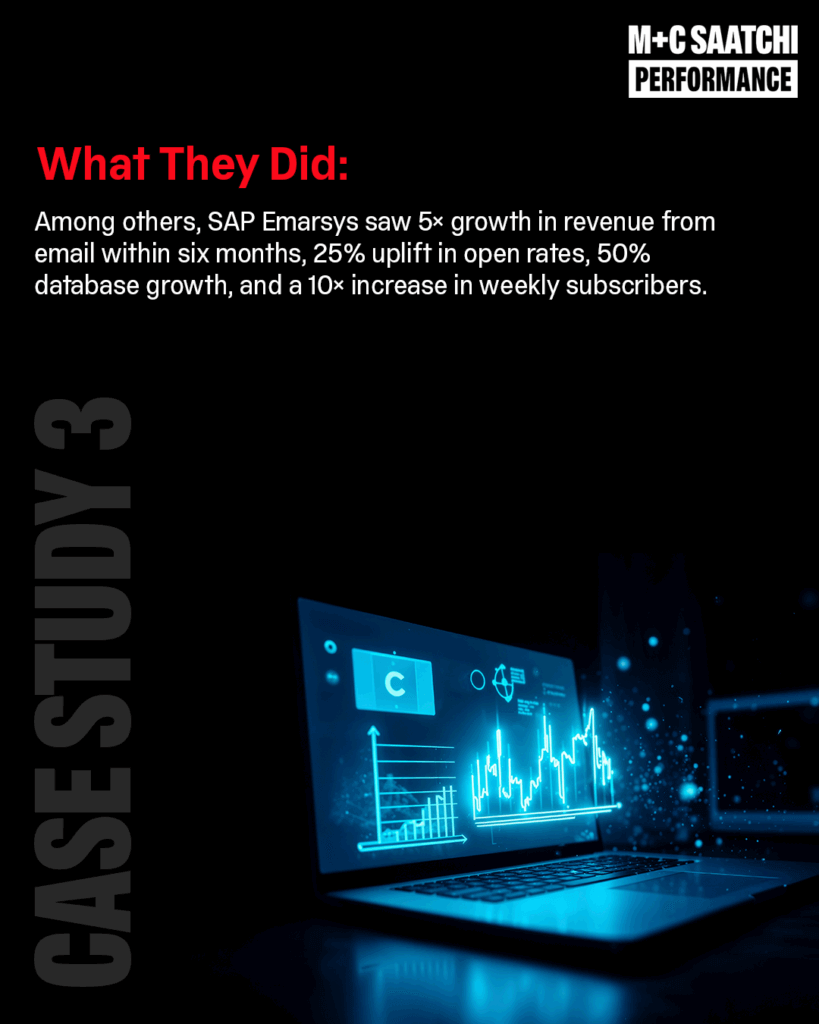
Sources [18] say that by 2026, journey orchestration platforms that unify customer profiles, behaviors, and preferences across channels will be more widely adopted. This implies creative assets and messaging that consistently adapt or scale across channels.
Programmatic Advertising
The Open Internet Is Reclaiming Its Power
We predicted that spends would shift back to open internet channels, such as programmatic and CTV. In 2025, marketers increased programmatic and CTV budgets, and we saw early material growth in programmatic CTV ad spend.
In 2026 and beyond, programmatic advertising is expected to grow further due to data privacy issues and infrastructure changes, along with innovative growth from retail media data and AI-based planning and optimisation capabilities.
CTV To Become Programmatic’s Next Big Growth Market
Our sources predicted that the rise of streaming platforms would drive programmatic advertising growth in Connected TV (CTV) in 2025, and the trend was proven to be true just by the first quarter of the year alone, as global open programmatic CTV ad spend rose 10% Y-o-Y to USD 5.02B in Q1 2025 [10].
Forecasts are for total CTV ad spend to continue growing. One source projected that CTV ad spend will grow to about USD 46.89 billion by 2028 [11].
Outdoor Inventory Will Expand Into Newer Spaces
Spends on programmatic DOOH globally has increased with a 16% rise in screen count from H2 2024 to H1 2025. By half of 2025, reports already showed that 50% of DOOH campaigns are already fully or partially programmatic, showing extensive growth from the previous years.
CAGR reports show a continuous growth for programmatic DOOH. According to one study [12], the global Programmatic DOOH market size was USD 7.8 billion in 2024, and is expected to grow with a CAGR of 13.2% from 2025-2033 to reach USD 24.7 billion by 2033. Another forecast anticipates a CAGR of over 12.5% from 2026 to 2033 for DOOH [13].

Megan Price
Director – Programmatic Strategy & Planning
“Programmatic DOOH is accelerating. Advances in targeting capabilities, paired with a rise and diversification of screens available, put this channel firmly in a marketer’s core mix. Measurement tactics such as incrementality and MMM further drive this growth as DOOH is proven to not only drive brand awareness, but also achieve lower funnel actions. In 2026, Programmatic DOOH will continue to shift from emerging to essential.”
Data and Measurement
The Future of Targeting Runs on First-Party Data
As we said in January, first-party data rose in importance in 2025 and became the primary data model for driving revenue, personalization, and planning in many cases. A survey of publisher professionals found that, in Q1 2025, 71% said first-party data plays the most significant role in generating positive ad revenue outcomes, up from 64% a year earlier [14].
Google’s new “user choice” model from April 2025 will allow users to manage their privacy by controlling cross-site tracking. This makes first-party data the most reliable source for audience targeting and measurement. Global privacy regulations (GDPR, CCPA, and others) are tightening, pushing brands to prioritize data collected directly from customers with consent.
Unified Measurement Rises as Single-Model Attribution Breaks Down
We predicted that advertisers would move toward blended, unified measurement frameworks. While partially realized, many advertising operations are trying to implement these, but there are still gaps in attribution, especially where offline performance or multi-channel touchpoints are involved. Privacy constraints also complicate measurement.
M+C Saatchi OneView, our proprietary tool developed to solve this challenge for our clients, simplifies complex media measurement by combining modern MMM with attribution and geo-testing to help measure and optimize the impact of all media investments. Talk to our experts to learn more about how the tool can help your business.
Due to the market’s increasing demand for it, the trend will continue for the foreseeable future but in the shape of the unified measurement frameworks: Attribution frameworks that combine online + offline, digital + physical channels, multi-touch attribution with deeper weighting or custom models, instead of just last/first-touch or simple linear/time-decay, and blending in MMM (Marketing Mix Modeling) for high-level budget allocation + more granular attribution for campaign/channel optimization.
Predictive Analytics Emerge As The Bedrock of Future Planning
Although there is a lot of research and projections available, and we stated earlier in the year that predictive analytics will enable improved planning and optimization, evidence of widespread commercial impact across many industries is limited.
If we use the same CAGRs to forecast a trend for 2025, we see the same upward trajectory for 2026, with a predicted value of USD 100.20B by 2034, and a 28.3% CAGR from 2025 to 2030 [15].
Search Marketing
Rethinking Visibility In 2026 for The Zero-Click Era
And how can we not talk about the biggest shift that 2025 has brought upon us in search marketing, which will continue to dominate in 2026 and beyond!
As more users turn to LLMs for answers rather than clicking through search results, visibility itself is being redefined. Where SEO once ruled the discovery journey, 2025 invented a new reality for brands. They now need to optimize for rankings, as well as for how they appear inside AI-generated answers.
With Google’s global rollout of AI Overviews, the rapid adoption of ChatGPT, Gemini, and Copilot for research, and the rise of dedicated answer engines, GEO/AEO has moved from an emerging concept to a critical layer of visibility in this zero-click era.
The shift is significant. The Generative Engine Optimization (GEO) services market, valued at USD 886M in 2024, is projected to reach USD 7.3B by 2031 (34% CAGR) [16], and Gartner forecasts a 25% drop in traditional search traffic by 2026 as users increasingly accept synthesized answers over link clicks. In this environment, AI citation share, entity strength, and representation in generative responses become measurable performance KPIs tied directly to consideration and assisted conversions.
We’ve already seen the value of GEO in action. Take Broworks, for example, a B2B tech brand that leaned into authoritative content, entity optimisation, and structured data. Within just three months, 10% of their organic traffic was coming from generative engines, and more than a quarter of that turned into sales-qualified leads [17].
Heading into 2026, it’s safe to say that GEO won’t sit in a silo. It’s going to blur into paid, creative, and content strategy. Brands that are invisible in the AI answer layer will struggle to influence consideration, regardless of how aggressively they bid on traditional keywords.
Heading Into the Convergence Era of Performance Marketing
If 2025 was the year of acceleration, 2026 will be the year of convergence. AI, privacy, commerce media, and creative automation, which were once parallel conversations, are now colliding and shaping a single, connected ecosystem of performance.
Much of what we predicted has materialized, but what stands out most is how creativity and data now move in lockstep, turning precision into connection. Some trends, like predictive analytics and unified measurement, are still finding their rhythm, but their direction is clear.
As we look to 2026, performance will be defined not just by efficiency but by empathy, where innovation and impact meet to create more meaningful growth.
Get in touch with our experts to make the most for your brand by harnessing the latest trends.
Sources: [1], [2], [3], [4], [5], [6], [7], [8], [9], [10], [11], [12], [13], [14], [15], [16], [17] [18].