

How do marketers really connect ‘brand’ and ‘demand’ activity to deliver growth? We all know that brand investment drives long-term results, while demand delivers immediate performance. However, striking the balance to deliver business goals is a challenge that every marketer wrestles with. The ultimate challenge, of course, is to connect, measure, and demonstrate how ‘brand and demand’ strategies reinforce each other.
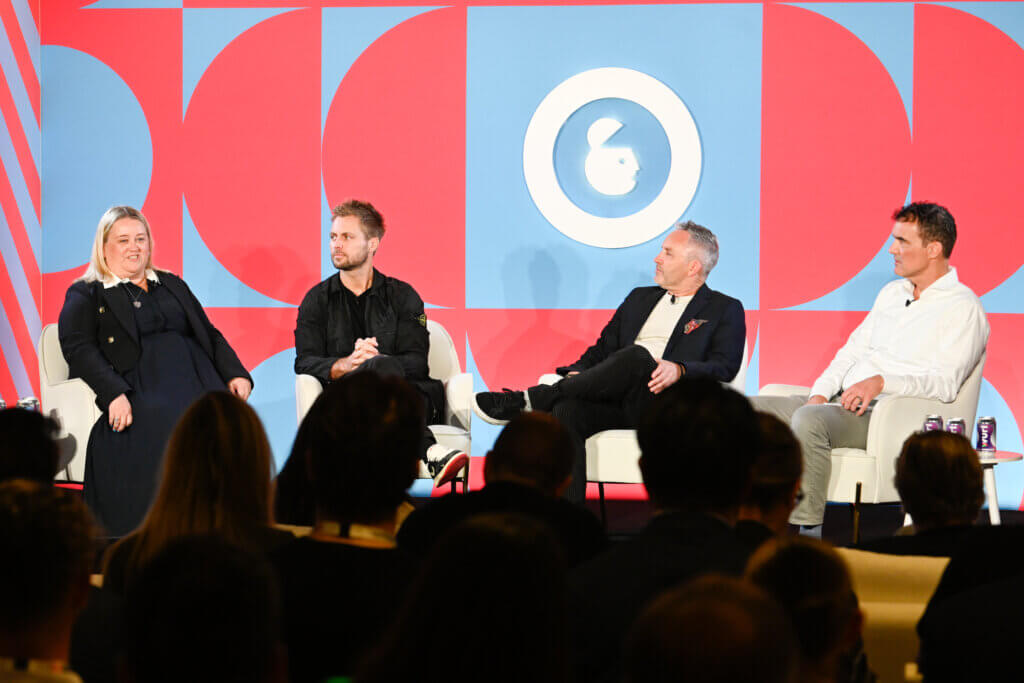
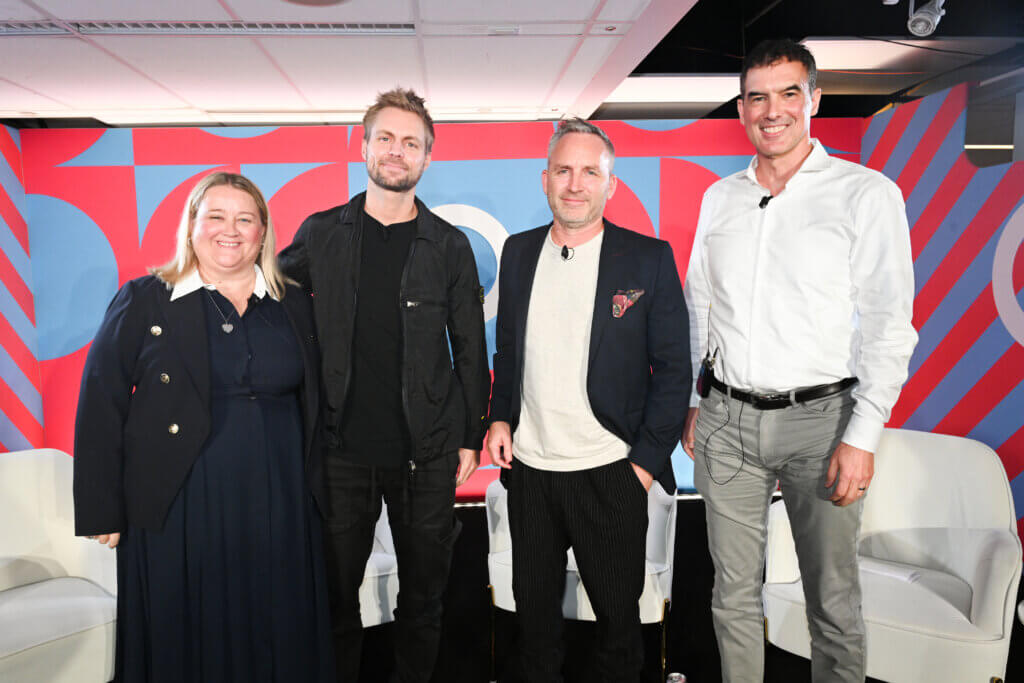
During Advertising Week New York this year, Jim Hamilton, MD North America, moderated a panel alongside two of our clients and AppsFlyer. On the panel, we were delighted to welcome Angela Morris, VP Audience Growth, Experience & Values at the U.S. Soccer Federation, Tyler Stewart, Head of Marketing, Gopuff, and Brian Quinn, President and GM at AppsFlyer.
While in very different businesses, each brand needs to balance the emotional power of culture and connection with the real-life and pressing reality of delivering sales. In the case of the U.S. Soccer Federation, a not-for-profit organization, Angela Morris discussed the balance required to deliver ‘soccertainment’ across a wide range of passionate but widely different audiences while ultimately selling seats. Tyler Stewart, from Gopuff, brought to life the challenge of differentiating in a crowded market through the power of entertainment, while ultimately driving sales by delivering on the Gopuff promise of 15-minute delivery, again across a diverse range of audiences with varied needs. The discussion was fascinating, and below is a glimpse of the three key themes the panel discussed. To learn more about how we help clients navigate the complexities of managing and measuring both brand and demand campaigns, please contact us.
Theme 1: How to connect brand storytelling with performance.
Understanding your audience:
Angela Morris, VP Audience Growth, Experience & Values at the U.S. Soccer Federation, kicked off the conversation by explaining the importance of understanding the audiences. To meet fan expectations and build experiences, the U.S. Soccer Federation has undertaken a granular research exercise to delve into the power of soccer fandom. Angela said; “We represent not just the national team but many audiences across the ecosystem. On the fan side, we want to understand the meta psychology of why people love soccer, especially at the moment with this pivotal moment of transformation”. Other audiences include families and youth teams, each with different needs. With a deep understanding of the audience, both performance and brand campaigns can be clearly targeted to reach these different audiences. “Thanks to this detailed research, the U.S. Soccer Federation has redefined brand positioning and, from a branding perspective, developed storytelling in a tone appropriate to specific audiences.” she said.
The importance of Differentiation:
For Gopuff, a leading instant commerce platform that delivers daily essentials in as little as fifteen minutes, the challenge is to stand out in a crowded delivery space. Tyler Stewart, Head of Marketing at Gopuff, explained that to differentiate, Gopuff focuses on an ‘entertain or die’ strategy. Tyler said, “Delivery is delivery, so we position ourselves as a challenger and focus on key differentiators—and we do that through entertainment. This allows our message to resonate and drive relevance for customers through both brand and performance. A brand hero campaign or a social ad might represent this. But both will have entertainment as the north star, which ensures a consistent brand identity without diluting messaging and therefore delivers both brand and performance.”
“The data is there. What gets complex is how to identify a thorough output when there are so many data inputs. Instead, marketers could think conceptually about how to connect a passion to a measurable outcome. This will enable both brand and performance to come together and prevent silos.”
Tyler Stewart, Head of Brand Marketing & Creative Partnerships, Gopuff
Combining Brand and Performance for Success
Brian Quinn, President and General Manager at AppsFlyer, discussed the need for both brand and performance angles to succeed. He said; “Most of our customers are performance marketers who are trying to understand and justify brand investments. We are increasingly seeing better models to understand ROI holistically across brand and performance. Take CTV as an example of a collision between linear TV agencies buying alongside performance marketing teams to use CTV as a performance channel.
Tip: Deep dive into customer segments and research to thoroughly understand their personas. This will enable clear, audience-based strategies to be developed, from effective targeting to consistent and engaging messaging and creative.
Theme 2: How can brands break down silos and achieve meaningful measurement?
Silos are a Human Issue
Brian Quinn began; “ Brands still want a ‘single source of truth’, but we find that any silos that exist tend to be more in the minds of the people and organizations rather than the tech. These silos tend to have developed over time within organizations, so the issue becomes more of a leadership question than anything else. The answer is that leaders need to demand better measurement. We advise clients to stop putting KPIs on specific silos and having people compete for budget and ROI, as this causes silos to develop and prevents holistic measurement.”
“Our job is to educate people on measurement. This is a people-human problem rather than a technology issue.”
Angela Morris, VP, Audience Growth, Experience, & Values, U.S. Soccer Federation
The Power of Partnerships
At Gopuff, partnerships are a success strategy, and the team focuses on ‘mega moments’ such as Halloween or New Year’s Eve to create engagement and demand. Tyler gave an example of a successful partnership involving Liquid Death during the Holidays. “We created collaborative hot tubs, everything was themed, we even had Liquid Death bathing suits. Everyone could get a bathing suit with their Liquid Death order for a limited time, and a few lucky winners would actually receive a hot tub.” The objective was to use a partnership to create an experience that would cement a behavior. “We gave people a reason to come back to Gopuff and purchase Liquid Death now. The partnership generated both instant sales and longer-term impact, with Liquid Death sales showing sustained sales at five times the previous rate. So we focus on creating partnerships that build an experience and develop a behavior to drive a core metric.”
Emotions, Experiences, and Storytelling
Angela Morris explained that, at the U.S. Soccer Federation, they think of themselves as part of ‘an Emotion and memory factory’. She said; “People get so emotional about a sport they love, so we are currently reimagining what match day looks like in the run up to the World Cup in 2026. We also focus on experiences; for example, building experiential pre-match activities that generate excitement through ‘Soccertainment’ to answer what ‘match day max’ looks like for all their different audiences.
Tyler discussed how, at Gopuff, creating experiences that customers want to be a part of lies at the heart of many of their advertising activations. ‘Entertainment is one strategy, and relevance is another, and marketers should try to do both. Regardless of digital or physical, the experiences that customers and fans want to be a part of are a guiding light.”
Tip:
All the panel agreed that ‘Brand love is not enough’ for growth, and brand campaigns have to be viewed as a growth channel, not just there for vanity metrics. Tyler Stewart said; “Passion is the proxy, the proof is in the purchase. Brand campaigns have to translate into behavioral change that can be tracked, for example, through repeat purchases, or higher average order value, etc.”
Theme 3. How can brands innovate with intent and choose the right partners to enable growth?
Pick Partners for Long-Term Growth.
The panel advised the audience to ‘Be very intentional about partners’. Angela Morris said; “U.S. Soccer is actually a not-for-profit organization, so we rely on partners for investment to deliver fan experiences,” who explained how U.S. Soccer seeks long-term partners like American Airlines, to build loyalty programs, for example, lounges for matches. Angela said; “long-term partnerships also enable principles such as building first-party data, which builds the brand for the future.”
AI, Innovation, and Audiences
The conversation then shifted to the role of innovation in driving this growth, specifically in the context of AI.
Brian Quinn said; AI has been the hottest topic for several years and is changing so much of the media landscape, from creative analytics to measurement. The current hype is around creative production, but focusing on understanding what is actually working and what iterations of creative are driving performance without having to run lengthy testing is one way of driving value.”
The panel discussed the fundamentals of change, with measurement and analytics now on a new frontier that no longer requires coding, thanks to LLM development.
“AI is completely changing the way that we consume insights; now everyone can access insights at rapid speed,” said Brian Quinn. “This democratization of insights access is one real revolution in AI-driven measurement. We’re moving away from a world where marketers are as dependent on data scientists. New concepts, like Model Context Protocol (MCP), allow leaders to ask complex, natural language questions directly to their complete data sets. So you can ask: ‘How did our brand partnerships influence repeat purchase behavior in the app?’ and get an immediate, reliable answer. This speed from question to insight allows teams to connect brand strategy to performance outcomes in real-time.”
The panel went on to discuss other areas where AI is having an impact. For example, Angela Morris pointed out the efficiency AI is bringing to audience understanding. “We’re able to create addressable audiences and are being far more intentional about reaching audiences such as fans, referees, coaches, players, families, etc.”
For Gopuff, Tyler Stewart explained how the creative team at M+C Saatchi Performance and Gopuff is utilizing AI to generate multiple creative iterations. We’re linking up performance creative, producing assets that drive frequency and efficiency while remaining human.
Tip: Brian Quinn, President and GM, N America, AppsFlyer “Be clear on true business objectives when selecting partners. It’s easy to get lost in the details and lose track of the objectives.
In Summary
Achieving the ultimate balance of ‘Brand and Demand’ for growth will be unique to each brand and requires a specific strategic direction set by management. The data and technology are available to ensure all pillars are accessible to even the smallest teams. Establishing the principles in place is essential, encompassing holistic measurement, brand positioning, deep audience knowledge, and effective partner selection.
Thank you to the panelists for providing their unique insights into such a complex topic.
To find out how we can help your brand grow through brand and demand strategies, contact us.
Panel Participants:
- Moderator: Jim Hamilton, MD, N America, M+C Saatchi Performance
- Panelist: Brian Quinn, President and GM, N America, AppsFlyer
- Panelist: Tyler Stewart, Head of Brand Marketing & Creative Partnerships, Gopuff
- Panelist: Angela Morris, VP, Audience Growth, Experience, & Values, U.S. Soccer Federation